Medical Study India | Trusted Guidance for Medical Aspirants

Medical Study India | Trusted Guidance for Medical Aspirants
Deep inside the National Testing Agency’s paper-setting operation is a highly secured premises in New Delhi that was not supposed to be breached. It’s effectively hermetically sealed: no phones, no laptops, no devices, no internet, air-gapped computers, logs tracking every document, mandatory shredding of all notes. It was designed, after the NEET leak of 2024, to be the last word in securing the medical entrance test.
The people at the centre of the NEET-UG 2026 leak investigation were trusted insiders embedded in the most protected phase of the examination process. And at least one of those arrested had worked on last year’s NEET paper, too.
That the leak happened despite this has rattled the Government.
Also Read | From experts to accused: Prominent Pune faces in NEET-UG paper leak
The CBI has arrested 13 people so far, including paper translators, subject experts and intermediaries accused of circulating sections of the question paper before the May 3 exam, taken by over 20 lakh students. Interviews with over a dozen officials, NTA insiders and experts associated with NEET-UG 2024, 2025 and 2026 by The Indian Express reveal there’s a broad internal consensus on an institutional failure that created conditions for the leak
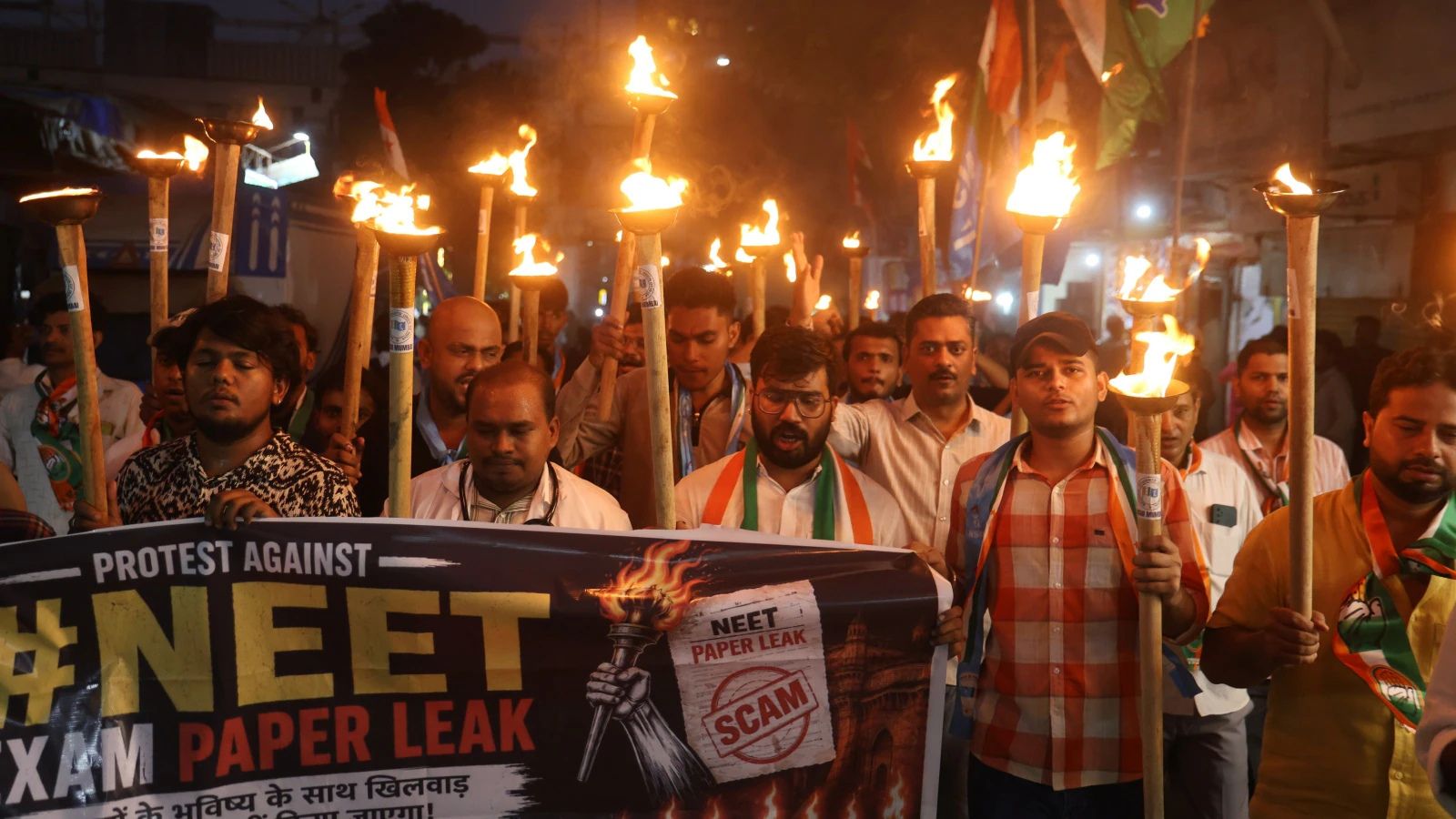
The people at the centre of the NEET-UG 2026 leak investigation were trusted insiders embedded in the most protected phase of the examination process. (File Photo)
Deep inside the National Testing Agency’s paper-setting operation is a highly secured premises in New Delhi that was not supposed to be breached. It’s effectively hermetically sealed: no phones, no laptops, no devices, no internet, air-gapped computers, logs tracking every document, mandatory shredding of all notes. It was designed, after the NEET leak of 2024, to be the last word in securing the medical entrance test.
The people at the centre of the NEET-UG 2026 leak investigation were trusted insiders embedded in the most protected phase of the examination process. And at least one of those arrested had worked on last year’s NEET paper, too.
That the leak happened despite this has rattled the Government.
Also Read | From experts to accused: Prominent Pune faces in NEET-UG paper leak
The CBI has arrested 13 people so far, including paper translators, subject experts and intermediaries accused of circulating sections of the question paper before the May 3 exam, taken by over 20 lakh students. Interviews with over a dozen officials, NTA insiders and experts associated with NEET-UG 2024, 2025 and 2026 by The Indian Express reveal there’s a broad internal consensus on an institutional failure that created conditions for the leak.
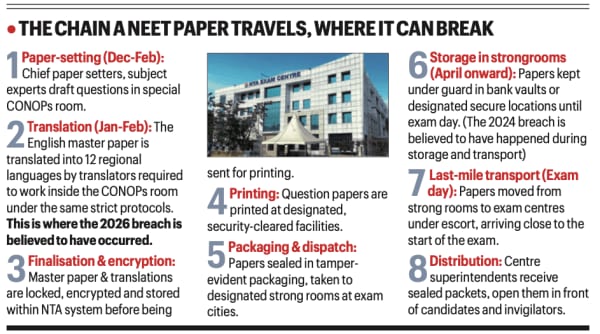
One, the security framework built after the 2024 controversy, known internally as “confidential operations” or CONOPs, was not consistently enforced in 2026. And the person who had built and overseen that framework was gone at the wrong moment, leaving a leadership vacuum in the system during the most sensitive phase of exam preparation.
Also Read | Exclusive | What teacher who first flagged NEET leak wrote in his complaint
“We are missing the larger issue,” said one official, who did not wish to be identified. “If the confidential operations protocols were functioning the way they were supposed to, it would have been extremely difficult for anybody to access, retain and circulate complete sections of the paper.”